New and Experimental Music,
Art & Technolgy
New and Experimental Music,
Art & Technolgy


New and Experimental Music, Art & Technology

The Chicago-based Dominican-American musician Julián Pujols Quall describes themself through four closely connected roles: “composer, improviser, interpreter, pianist.” Improvisation, however, entered their musical practice considerably later than performance.
Music surrounded Pujols Quall from early childhood and across very different traditions. They began singing in school choirs at around five, were encouraged by their music teachers, and grew up listening to everything from classical music and the Beatles to Dominican musicians such as Juan Luis Guerra. Their father introduced them to the piano, teaching them their first notes and scales.
Jazz was present from early on, although for years primarily as something heard rather than improvised. Pujols Quall describes their parents as “jazz heads” who began taking them to jazz clubs when they were around seven. They participated in several jazz programs while growing up, yet, as they put it, “never learned to improvise.” At the same time, their development as a classical pianist became increasingly rigorous. They won First Prize in the DePaul University National Concerto Competition and later went on to study at the Peabody Conservatory of Johns Hopkins University.
The separation between classical performance and improvisation began to dissolve in college, when Pujols Quall, surrounded by jazz musicians, increasingly felt an urge to participate in the musical language they shared after hours. The shift happened only weeks before the COVID-19 pandemic; when lockdown followed, Pujols Quall devoted much of the quarantine period to practicing jazz. “From then on,” they say, “it stuck as part of my practice.”
What emerged was not simply a transition from classical piano into jazz. Improvisation began opening additional routes into composition, experimentation, and collaborative music-making. At Peabody, Pujols Quall became a founding member of the Peabody Improvisers Collective, an experience that further immersed them in collaborative improvisation and experimental practice. The attraction to improvisation also became increasingly connected to a larger question of musical communication: how musicians can understand one another within highly abstract situations while retaining artistic rigor.
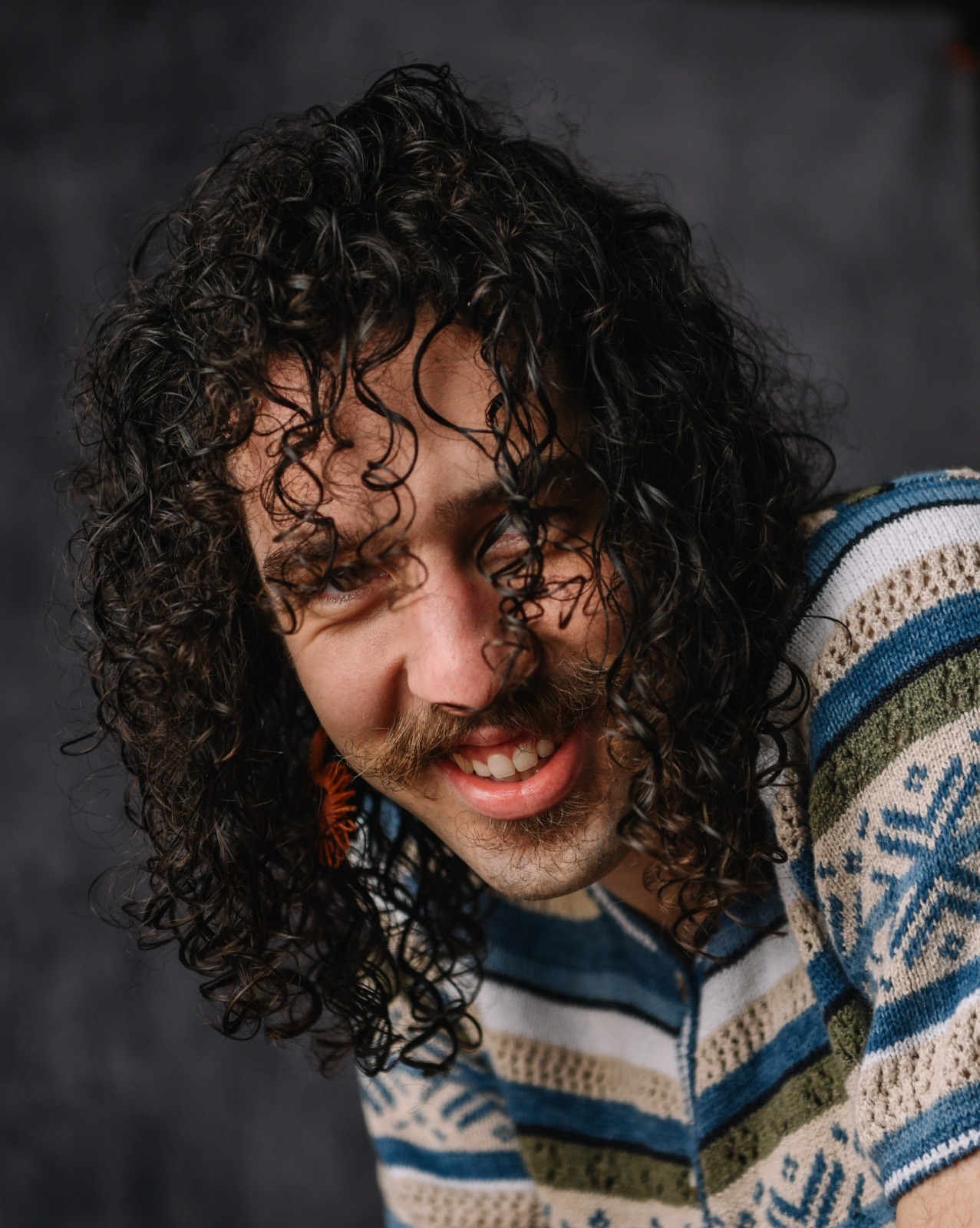
What began as a desire to participate more fully in the musical world around them gradually developed into a broader way of thinking. For Pujols Quall, improvisation is not simply spontaneous composition, nor can it be reduced to social interaction or artistic research. Asked which of those descriptions comes closest, they resist choosing between them. “I definitely don’t think of improvisation excluding any of those things” they explain. “Improvisation is a way to understand the human mind in anything that it does, and primarily, I feel it is a way to describe fluency in an environment.”
The idea of fluency shifts the emphasis away from improvisation as an act of inventing something without preparation. Instead, it suggests the ability to recognize an environment, understand its conditions, and respond from within it. The environment may change, as may the people, materials, or ideas encountered within it, but improvisation depends on being attentive enough to respond while remaining part of an unfolding situation. For Pujols Quall, that fluency also reveals a relationship: “That fluency depicts one’s relationship to whatever they are in communion with.”
This relational understanding also corresponds with an idea Pujols Quall has articulated elsewhere: an interest in how musicians can understand and communicate with one another even in highly abstract artistic situations while maintaining artistic rigor. In that sense, improvisation becomes less a demonstration of individual spontaneity than a process of listening, interpreting, reacting, and continually recalibrating one’s position in relation to others.
Seen this way, composition in real time, social interaction, and artistic research are not separate functions of improvisation but different perspectives on the same process. Each asks the performer to negotiate between individual agency and the conditions of a shared environment. For Pujols Quall, that negotiation becomes especially significant when improvisation moves from the individual performer into the collective – where fluency must coexist with the freedom of everyone involved.
That idea of fluency takes very different forms across Pujols Quall’s work – from negotiating characters and narrative roles in pieces such as Rothko: Tlaloc and Totec and Sin for a Sin to reworking musical traditions within Mamey.
If improvisation is a form of fluency within an environment, collective improvisation raises a more complex question: how can that fluency accommodate the freedom of everyone involved? For Pujols Quall, the Association for the Advancement of Creative Musicians (AACM) has provided an important model for thinking through that question. They describe the organization as influential in their life “in probably more ways than I am aware of,” particularly through what they call the “liberatory nature of collective improvisation.”
“For the group to have such a quilted array of different styles means the material didn’t keep them together, but the way the musicians made the material did,” Pujols Quall explains. What creates coherence, then, is not necessarily a shared style or vocabulary, but the way musicians relate to one another while making the music.
For Pujols Quall, this also gives composition a political dimension. “It recontextualizes composition and music as a political thing in and of itself,” they say, adding that “group improvisation is a representation of life.” The challenge is to preserve each participant’s “sense of freedom” while still working toward a shared musical goal – a balance they say their experience with free improvisation has taught them repeatedly. In that sense, collective improvisation extends their idea of fluency: responding to a shared environment without erasing the individuality of those within it.
Pujols Quall’s compositional process often begins not with a particular style or sound, but with a concept that can be organized among performers. They describe the process through what they call “the political reasoning known as arrangement,” with politics understood as “the organization of power.” In practice, this means thinking about how a concept is distributed among the people involved and how their roles relate to one another. “The sound follows after that,” they explain.
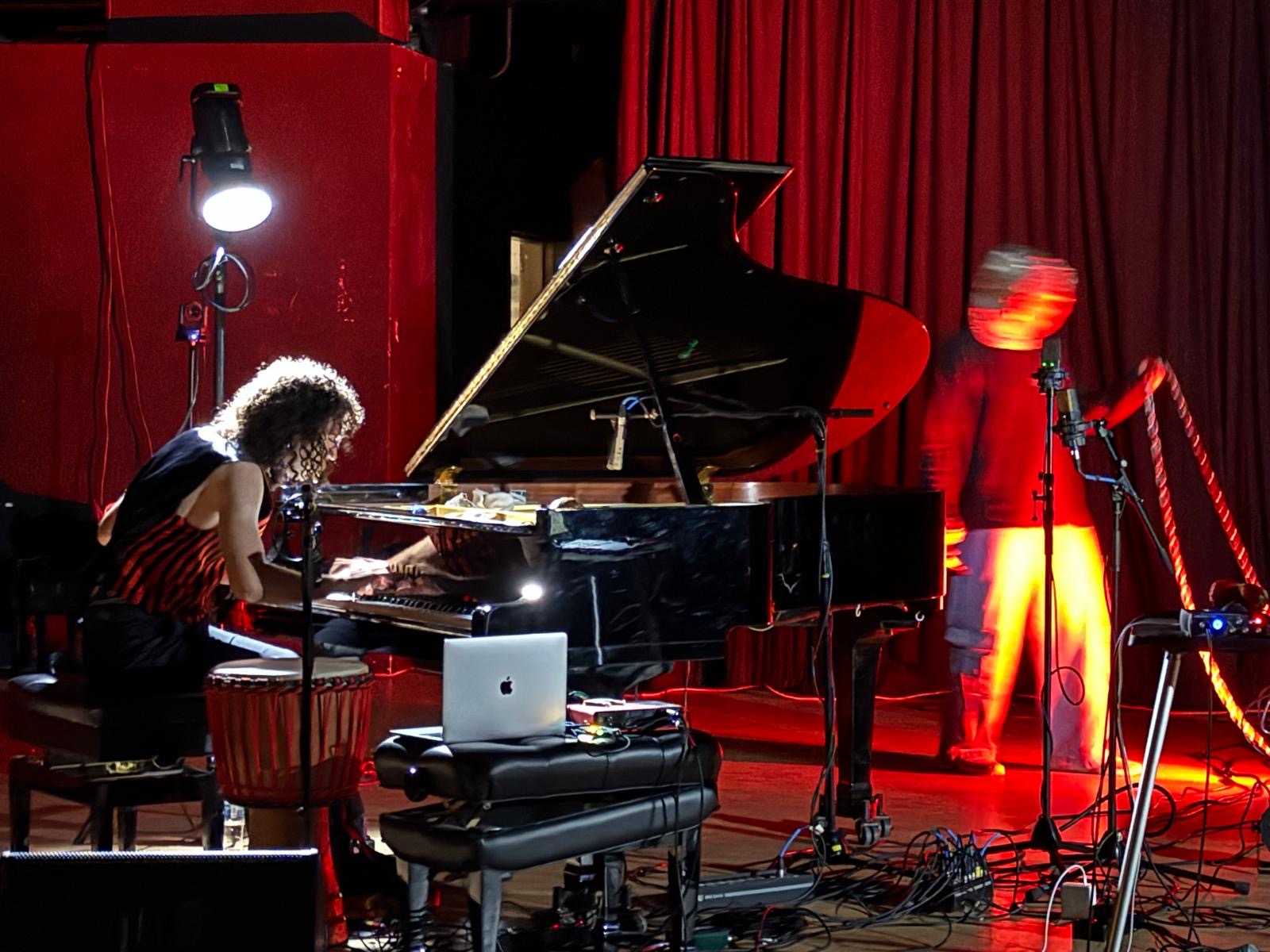
This approach can be heard in Chord Prelude, a work for two performers, here realized through piano and electronics. Pujols Quall describes its underlying idea as a “vowel consonant duo.” The two performers are assigned contrasting roles, with one associated with the consonants and the other with the vowels of the poem, allowing the musical dialogue to emerge from that structural opposition.
In performance, the contrast is articulated in several ways. The piano often moves through faster passages, while the electronic part, controlled with a game joystick, may process the piano in different ways (adding new textures, repetition, movement, or a sense of space) or provide a sustained drone in counterpoint. The phrasing also reflects the relationship between the two performers: each allows the other to complete a gesture, while at the ends of verses they arrive together. Some sections close abruptly, while the following material begins more slowly and expressively, reinforcing the sense of dialogue built into the structure.
Composition, in this approach, becomes less a matter of choosing a stylistic language in advance than of establishing relationships, roles, and constraints from which the sound can emerge.
Pujols Quall’s approach to improvisation takes on another dimension when language, character, and theatrical action become part of the musical structure. In these pieces, improvisation is not simply a matter of choosing notes in real time. Performers may inhabit characters, interpret text, respond to cues, negotiate narrative roles, or move between musical and linguistic forms of communication.
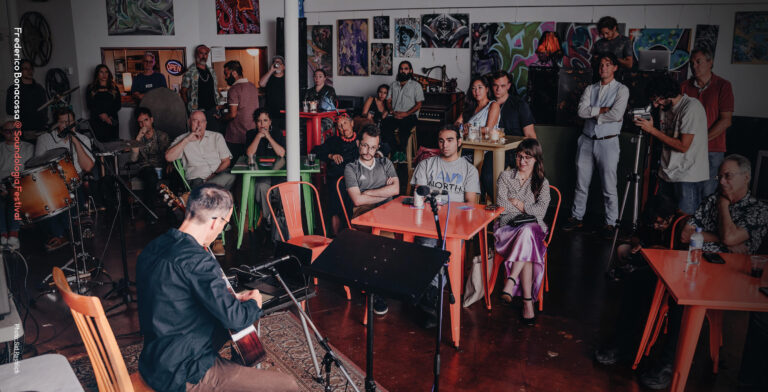
Two such works, Rothko: Tlaloc and Totec and Sin for a Sin, were performed at Elastic Arts as part of a program Pujols Quall curated for Fulcrum Point New Music Project, reflecting a curatorial practice that runs alongside their work as a composer and performer.
Rothko: Tlaloc and Totec began with an encounter outside music. While studying Mark Rothko’s Black over Reds for an art history class, Pujols Quall spent an hour observing and sketching the painting. As they worked, figures began to emerge from its brushstrokes. Those perceived forms led them through different mythological traditions until Aztec mythology provided a world that seemed to correspond with what they had seen in the image.
The choice of Tlaloc and Xipe Totec grew directly from those visual associations. A mountain, river, sea, and cave suggested Tlaloc’s domain, while other forms in the painting led Pujols Quall toward Xipe Totec and the deity’s imagery of death, rebirth, and flayed skin. Rather than translating Rothko’s painting literally into sound, Pujols Quall used the visual material as a pathway toward a mythological and dramatic framework.
Within that framework, the performers occupy particular narrative roles. Each god is represented by a musician, while a narrator operates, in Pujols Quall’s words, as “the glue.” When the story is told in the third person, the gods remain the principal actors and the narrator takes a more accompanying role; in first-person passages and quotations, that relationship becomes more explicit. Yet the division is not completely fixed. Pujols Quall explains that these roles may be composed or left open to interpretation, with the ideal being that performers understand the text deeply enough to “hear ourselves speaking it musically.”
The vocal dimension of the recorded performance comes through Lorin Benedict. Pujols Quall had already performed the piece in numerous configurations with the Peabody Improvisers Collective before Benedict became involved. Benedict happened to be in town when Pujols Quall organized an informal session, and the ensemble sight-read the piece. The result worked well enough that Pujols Quall and Qiujiang Levi Lu arranged a recording session the following day and captured it in a single take.
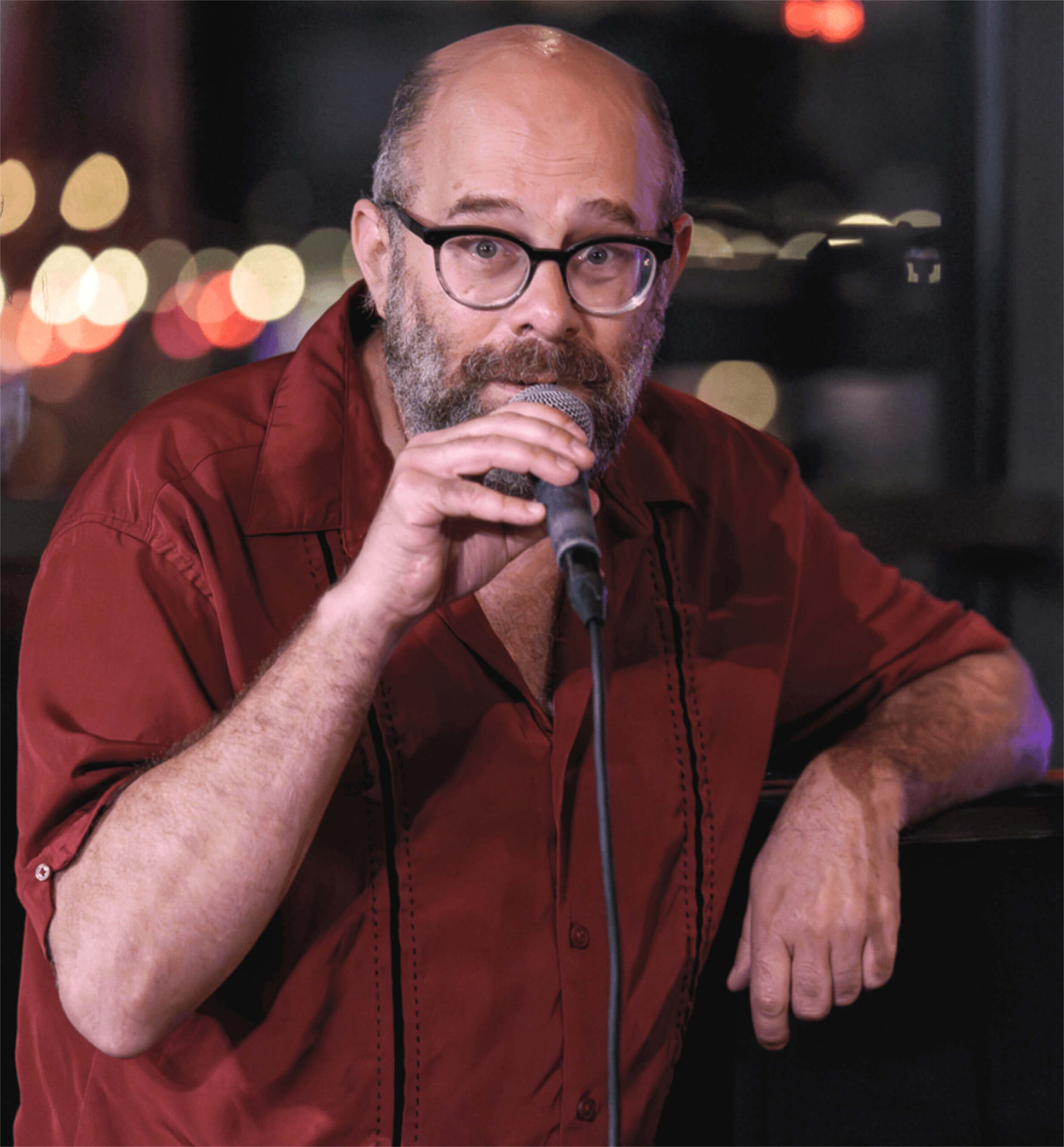
Benedict’s vocal practice brings another layer to the work. Known for a highly individual approach to scat singing and vocal improvisation, he operates in a territory between speech, invented language, and melodic line. A KQED profile describes the extent to which his improvised vocabulary has become recognizable to other musicians; pianist Taylor Eigsti refers to “Lorin’s language,” recalling that he and his wife “try to speak to each other” in it and noting that Gretchen Parlato does so as well.[1]
Benedict himself does not describe this as a codified invented language. Rather, he sees it as an instrument-specific means of articulation, drawing on the “phonemic trappings” of languages he has heard and using them as musical material. The particular sounds are guided by the same intuitive aesthetic choices that shape his notes and rhythms – essentially, by what “sounds good” to him. Although he does not work from a fixed set of linguistic principles, he acknowledges that recurring patterns have naturally emerged within his vocal practice.[2]
In Rothko: Tlaloc and Totec, Pujols Quall works with an English text of their own creation, projected during the performance and transformed through internal wordplay, parenthetical letters, and shifting linguistic associations. Benedict’s vocal part adds another layer through his own non-lexical vocal language. Rather than functioning simply as a direct recitation of the written text, the voice becomes an improvising instrument within the work’s musical and dramatic structure.
His phrasing can establish the direction of a gesture while piano and electronics respond, extend, or redirect it; at other moments, the relationship reverses. The three performers listen closely enough that phrasing becomes collective, with pauses, shifts in density, and changes of pace helping shape the work’s dramaturgy. The voice retains characteristics of speech – syllabic rhythm, consonantal attack, vowel color, accent, and prosody – without necessarily producing lexical meaning. In this context, Benedict’s vocal language becomes another means through which the performers negotiate meaning, character, and musical direction.
Benedict recalls that Pujols Quall provided the English text together with fairly specific interpretive guidelines, while much of the realization developed through rehearsal and collective discussion. Initially skeptical that the musicians would be able to “stay together” while improvising from the text, he later described the piece as a “radically different paradigm for the structuring of otherwise ‘free’ improvisation.” For Benedict, who notes that he does not read standard music notation, Pujols Quall’s approach even provided a means to “‘read music’ along with others,” producing what he describes as “enhanced detail and interactivity.”
Sin for a Sin extends this relationship between text, character, and improvisation considerably further. The work grew out of a broader group of “word pieces” concerned with improvisational communication through linguistic abilities, using a loose narrative outline as a framework rather than a fixed text. Here, each musician inhabits multiple characters, while Sabrina Alsaffar improvises the text itself during the performance. The musicians studied their characters beforehand, helping to establish parameters for the text and cues that would signal when they should enter. They then had to interpret the resulting prose-poetry in real time, relating its changing meaning to the characters they were performing.
The piece therefore combines preparation with a highly fluid form of interpretation: the performers cannot know precisely what language they will encounter during the performance. Pujols Quall describes Sin for a Sin as “the most ambitious thing I’ve done,” and it reveals an important dimension of their approach to improvisation: fluency involves not only responding musically to other performers, but responding to meaning as that meaning itself is being generated.
A different kind of collaborative framework appears in imPREYvisation, developed with Rohan Chander, also known as BAKUDI SCREAM. The project grew from Pujols Quall’s admiration for Chander’s album Prey. After discussing the ideas behind the album, Pujols Quall proposed improvising from several of its songs, while Chander suggested that the material also be recomposed. From the beginning, then, the work was conceived as an intentional collaboration rather than the combination of independently developed parts.
Chander’s practice brings together electronic music, performance, movement, costume, and light, while saxophonist Florian Nastorg works across improvised music, theater, and dance. Their different practices meet Pujols Quall’s within a work in which the musicians function not only as instrumentalists but also as performers shaping a dramatic space.
Pujols Quall moves between piano, djembe, and mouth instrument, but does not necessarily understand them as separate instrumental identities. Within imPREYvisation, they describe them as “a single expression most of the time” – effectively a “more modular and varied instrument” through which they move between different kinds of sound and gesture.
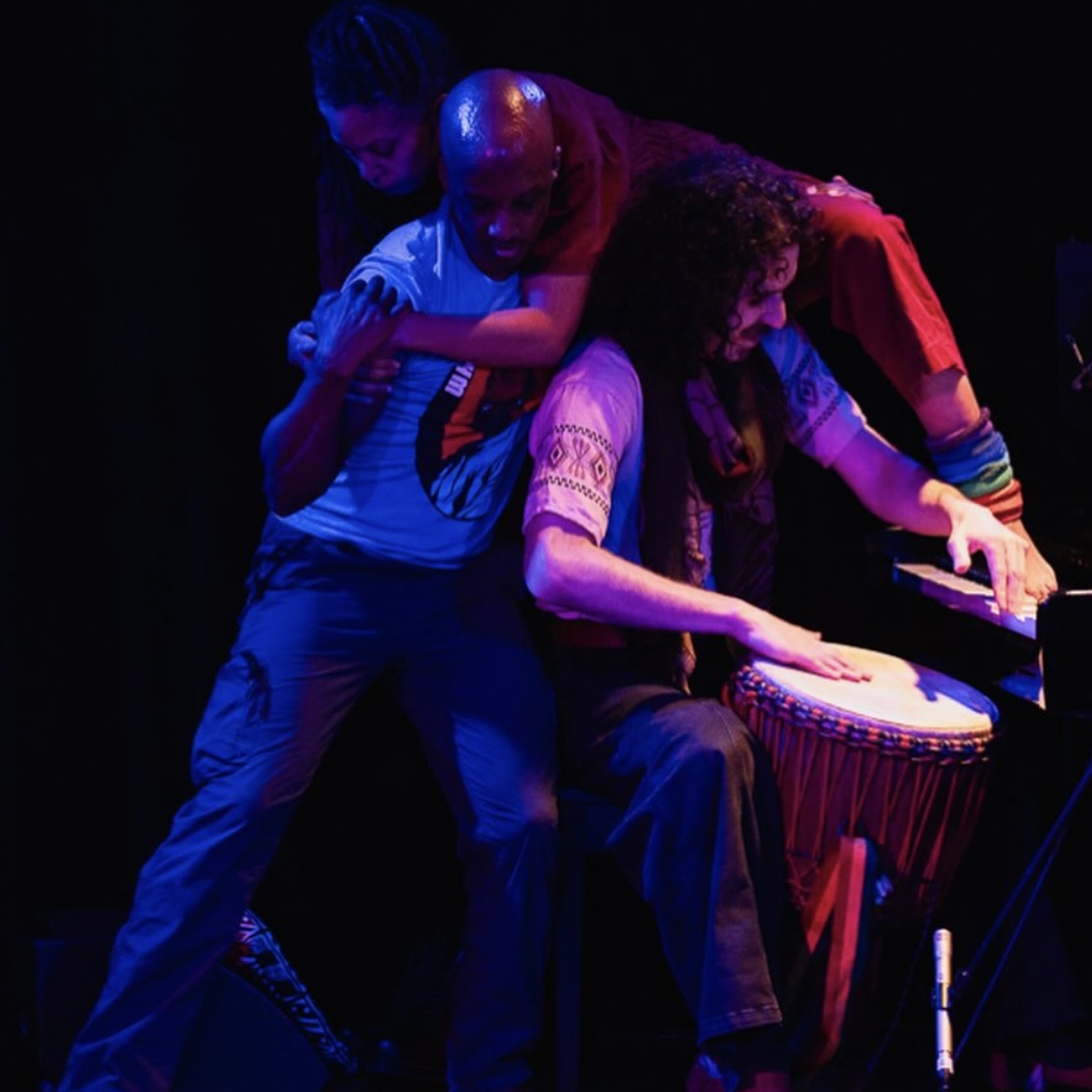
Light and physical action also participate in the structure. In one extended passage, a repetitive pulse develops through the sound of a chain, repeated saxophone tones, piano clusters, and djembe, gradually accumulating toward a break that opens space for a more intensive piano improvisation. Another element then enters: Hugo Enríquez’s Te voy a regalar un continente.
The song becomes both a musical reference and a theatrical device. Its appearance is accompanied by red light, which returns as a kind of visual leitmotif. The song reappears several times, but each return changes its identity. Initially recognizable, it becomes increasingly distorted; by the later appearance, electronic processing reduces it to fragments while piano and saxophone continue improvising around and against it. Rather than treating the quotation as a stable object, the performance gradually pulls it apart.
Pujols Quall recalls that Chander was drawn to the song’s grandiose character, connecting it to similarly expansive Bollywood songs. For Pujols Quall, it carried a different association: their mother jokingly recognized it as part of a particularly “corny” era of Latin American popular music in which songs could become strongly anthemic. Replaying and “screwing with” the material, Pujols Quall explains, created a setting in which their harmonic and freely textured improvisation with Nastorg could develop.
The theatrical organization becomes especially visible when the stage appears to divide into two simultaneous areas of activity: Pujols Quall and Nastorg interact instrumentally on one side, while the masked Chander moves through the space, triggers the recorded material, manipulates electronics, and controls the lighting. Sound, movement, and light therefore do not simply accompany one another; they create parallel layers of action that periodically converge.
Seen in this way, imPREYvisation crosses several boundaries at once. It draws on free improvisation, instrumental theater, electronic performance, and the postmodern use of a recognizable popular song as cultural reference. Its dramatic form does not depend on a conventional narrative but emerges through recurring sounds, changes in light, physical movement, accumulation, interruption, and the musicians’ responses to one another.
Across Rothko: Tlaloc and Totec, Sin for a Sin, and imPREYvisation, language and communication operate in very different ways. One piece grows from a painting into mythology and narrative roles; another asks musicians to interpret characters through text being invented in real time; another places improvisation inside a collaborative field of movement, electronics, cultural memory, and recomposed musical material. What connects them is less a common style than a recurring interest in how performers understand one another while navigating systems that remain partly open.
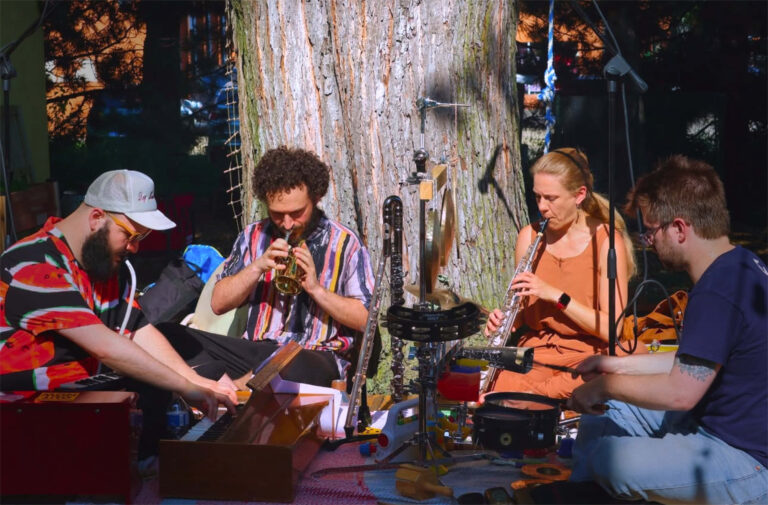
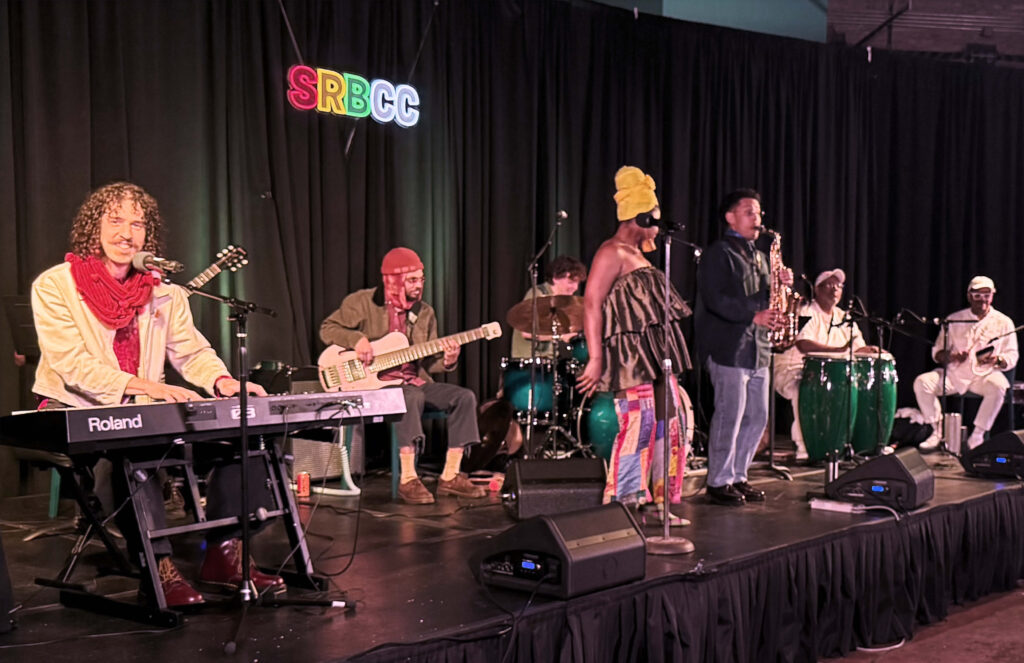
A different side of Pujols Quall’s practice emerges through Mamey, the ensemble they founded around Dominican and Haitian musical traditions. The project began in 2023, after the Dominican Embassy to the European Union and Belgium invited Pujols Quall to perform for an EU–CELAC summit. What initially required deeper research into Dominican music soon revealed connections with Haitian traditions that, as Pujols Quall recalls, they had either not known or felt were not widely recognized. That discovery expanded the project from an exploration of Dominican music into what they describe as an examination of “the whole island musically.” The ensemble’s debut album, Quisqueya, developed from that broader exploration of the musical and cultural relationships across Hispaniola.
Mamey consequently treats Hispaniola not as a culturally fixed space, but as one shaped by intersecting histories and musical traditions. Pujols Quall became interested not only in the relationship between Dominican and Haitian music, but also in the different ethnic heritages operating within both countries. “Culture is naturally ever evolving,” they explain, describing the ensemble as a way to examine what cultural change means, what produces it, and how Mamey can reflect that process.
Mamey draws on traditions including Bamboulá, Sarandunga de Baní, Salve, Gagá, Kompa, and Dembow, using them as foundations for new arrangements and compositions. Across Quisqueya, Pujols Quall draws on sources ranging from musicians such as Isidro Bobadilla and Diblo Dibalá to field recordings. In Al paso, for example, they took the melody of a field recording of palos and reordered its notes to create a new melodic line, while Vapeur grew from arranging and recomposing rhythms heard in a field recording of the same name. The melody of Oriki, meanwhile, emerged from imagining what Enerolisa Núñez might sing with her choir.
For Pujols Quall, the relationship to tradition is ultimately one of continued engagement and transformation – what they describe as “loving something and finding where that relationship takes you.”
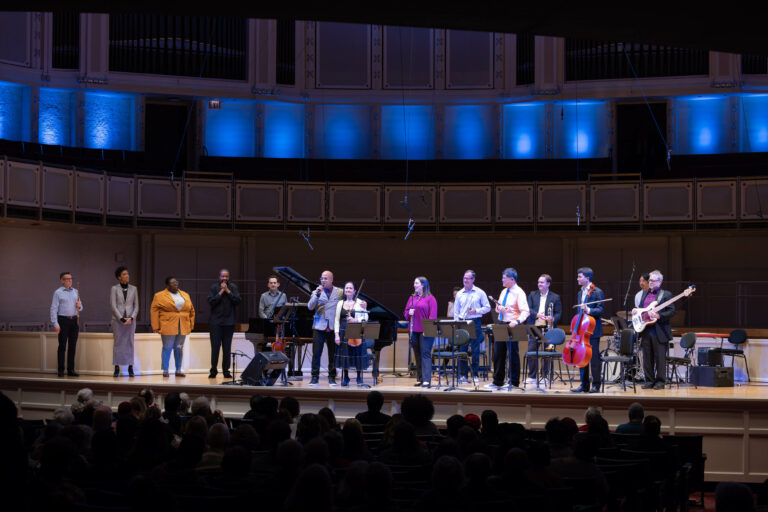
On June 27, 2026, Quisqueya was celebrated with a release concert at Segundo Ruiz Belvis Cultural Center, again curated by Pujols Quall, for Fulcrum Point New Music Project’s Discoveries Auxin: Connected! series.
Improvisation remains at the center of Pujols Quall’s practice, but rarely as an end in itself. Again and again, it becomes a way of testing how a concept can generate musical relationships before a particular style is defined. That process expands the musical vocabulary: the invented vocal language and extended scat practice of Lorin Benedict, unconventional combinations of instruments and electronics, and collaborative structures in which performers continually reshape one another’s roles.
The same openness extends into Pujols Quall’s theatrical and cultural work. Pieces such as Rothko: Tlaloc and Totec, Sin for a Sin, and imPREYvisation expand instrumental theater by layering text, invented language, character, movement, light, electronics, and improvised interaction rather than treating those elements as separate additions to the music. Mamey approaches a different kind of expansion, placing composition and improvisation in dialogue with Dominican and Haitian musical traditions and with the changing cultural relationships surrounding them. Across these projects, Pujols Quall’s work is less defined by a single sound than by a continually expanding field of possibilities – new voices, new materials, and new ways for musicians and traditions to encounter one another.
[1] KQED, “The Most Surreal Jazz Singer in the Bay Area Today,” available at: https://www.kqed.org/arts/13990561/lorin-benedict-jazz-scat-singer
[2] Lorin Benedict, email correspondence with the author, September 2026.